Altamirage is a variety of fortunate discovery that arises from unusual pursuits. It is not only less well known than the related idea of serendipity — it appears, so far, almost exclusively in neurology, where it has its natural origin.
The term Altamirage was introduced by the neurologist and Zen practitioner James H. Austin to describe a variety of good fortune that arises when someone pursues unusual activities and thereby goes beyond serendipity. Serendipity denotes the principle of chance by which unexpected discoveries are made.
A classic example of serendipity is the discovery of America while searching for a new sea route to India. Another variety also requires sagacity — to notice „by chance" that something interesting has just happened. Examples include penicillin, the microwave oven, the Post-it note and much more. As a neurologist, Austin understood that serendipity does not cover all varieties of chance discovery.
Chance discoveries through the senses and motor action
Neurologists are comfortable with this concept, because much of the nervous system we work with consists of anatomically separate sensory and motor units. — James H. Austin, The Varieties of Chance in Scientific Research, 1979
The point, then, is that a discovery — as a process carried out by the brain — always begins with the sensory intake of signals. But the processing must finally be followed by a motor response to complete the flow of information: you see the traffic light switch from red to green, you grasp its meaning — and you cross the street.
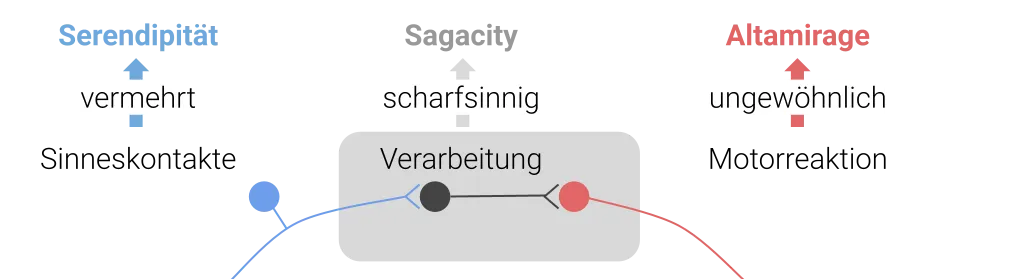
When the decisive precondition is the specific motor action — Austin speaks of „highly individualized action", with the emphasis on action, not reaction — chance discoveries are called altamirage.
Neurology combined with literature and physics
It is precisely here that altamirage sets itself apart from the two kinds of serendipity, because it presupposes the role of the unusual activity. Altamirage is the joy you experience when you first create your own terra incognita — and then step into it.
My own example, too — my professional work, and the reason I named this blog the way I did — is connected to neurology. But the connection is not through literature; it is through physics. When I research migraine with theoretical physics as the methodological frame, that is, admittedly, an unusual activity at first.
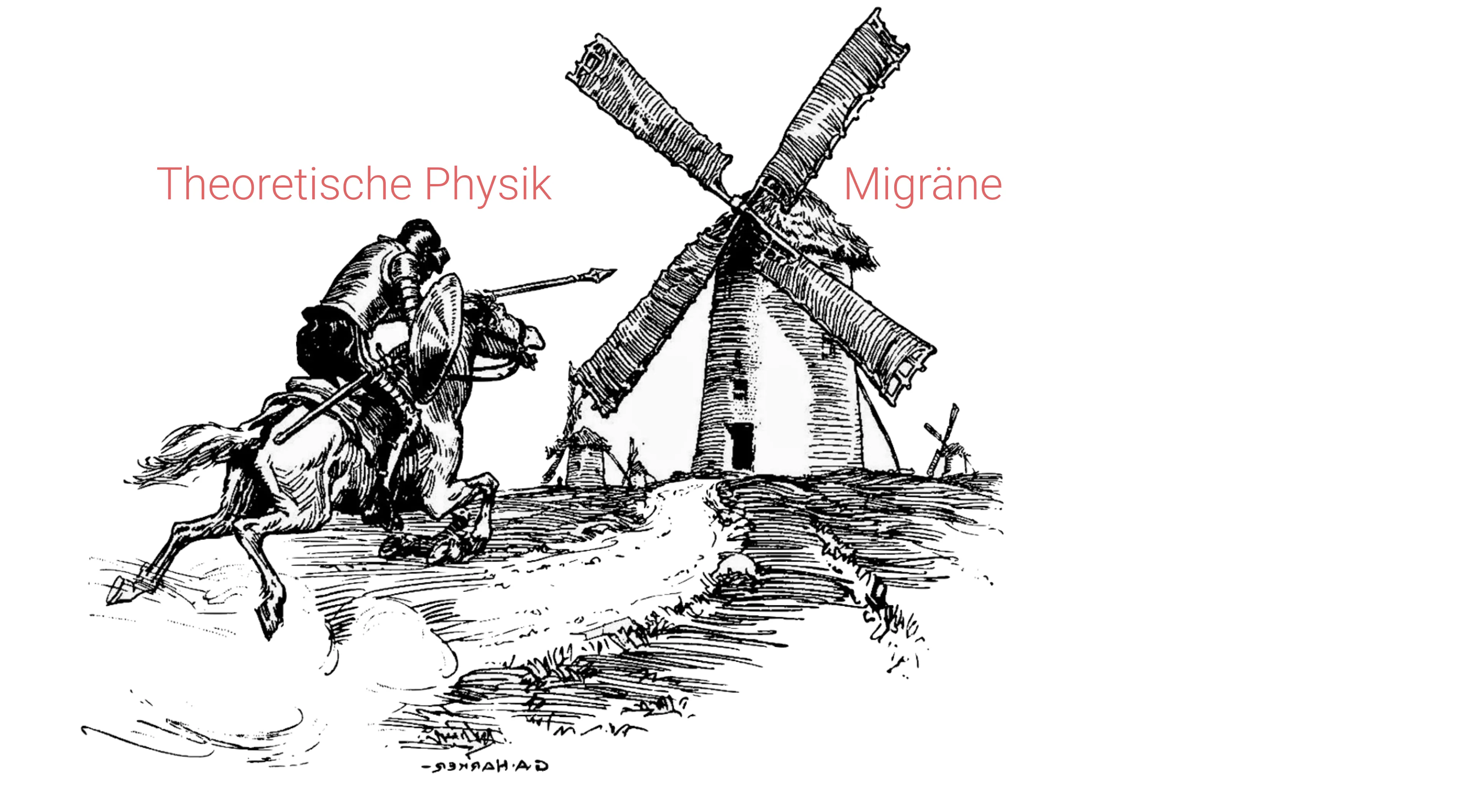
In the end, the essence of the distinction might be summed up like this:
- Serendipity is when chance shapes a life.
- Altamirage is when a life shapes chance.
The four variations of luck — including sheer luck — are described here. I'll leave the conclusion to Austin — perhaps not so much Austin the neurologist as Austin the Zen practitioner:
Do not rely on your luck. But do not rule it out either. Knowing the kinds of luck can help you avoid doing anything that scares luck away. — James H. Austin, neurologist and Zen practitioner
Notes & sources
- Austin, J. H. (1979). „The Varieties of Chance in Scientific Research." Medical Hypotheses 5 (7): 737–41.
- Araújo, R. (2022). „Altamirage and the Art of Clinical Neurology." The Lancet Neurology 21 (6): 510.
- Bähr, M. & Frotscher, M. (2003). Duus' Topical Diagnosis in Neurology.